NiMH cells are praised for working in the cold - many retain useful discharge performance well below freezing - but charging in the cold is a different and more dangerous matter. Low temperature slows every process a charge depends on: proton diffusion, electrode kinetics, and above all the oxygen recombination that keeps sealed-cell pressure under control. Push a normal fast charge into a freezing cell and gas accumulates faster than it can be consumed, driving pressure toward the vent even though voltage looks normal. This paper explains why cold caps charge current, quantifies the mechanisms, and details the safe strategies - qualification, conditioning warm-up, derated multi-stage charge - that let outdoor, winter-stored and cold-chain equipment charge NiMH reliably through the cold.
Lower temperature reduces ionic conductivity of the concentrated KOH electrolyte (which even has a non-monotonic conductivity-concentration behaviour sensitive to freezing), slows proton diffusion in the nickel active mass and raises charge-transfer resistance - all visible as the enlarged low-temperature EIS semicircle and DC resistance from Paper 17. Terminal voltage under current is consequently higher, which can fool a charger into believing the cell is near full when it is merely cold and resistive.
The hydride negative also absorbs hydrogen more slowly when cold, so its effective charge acceptance and its capacity reserve shrink at the very moment the positive begins evolving oxygen; the margin that makes sealed overcharge tolerable narrows precisely in the cold.
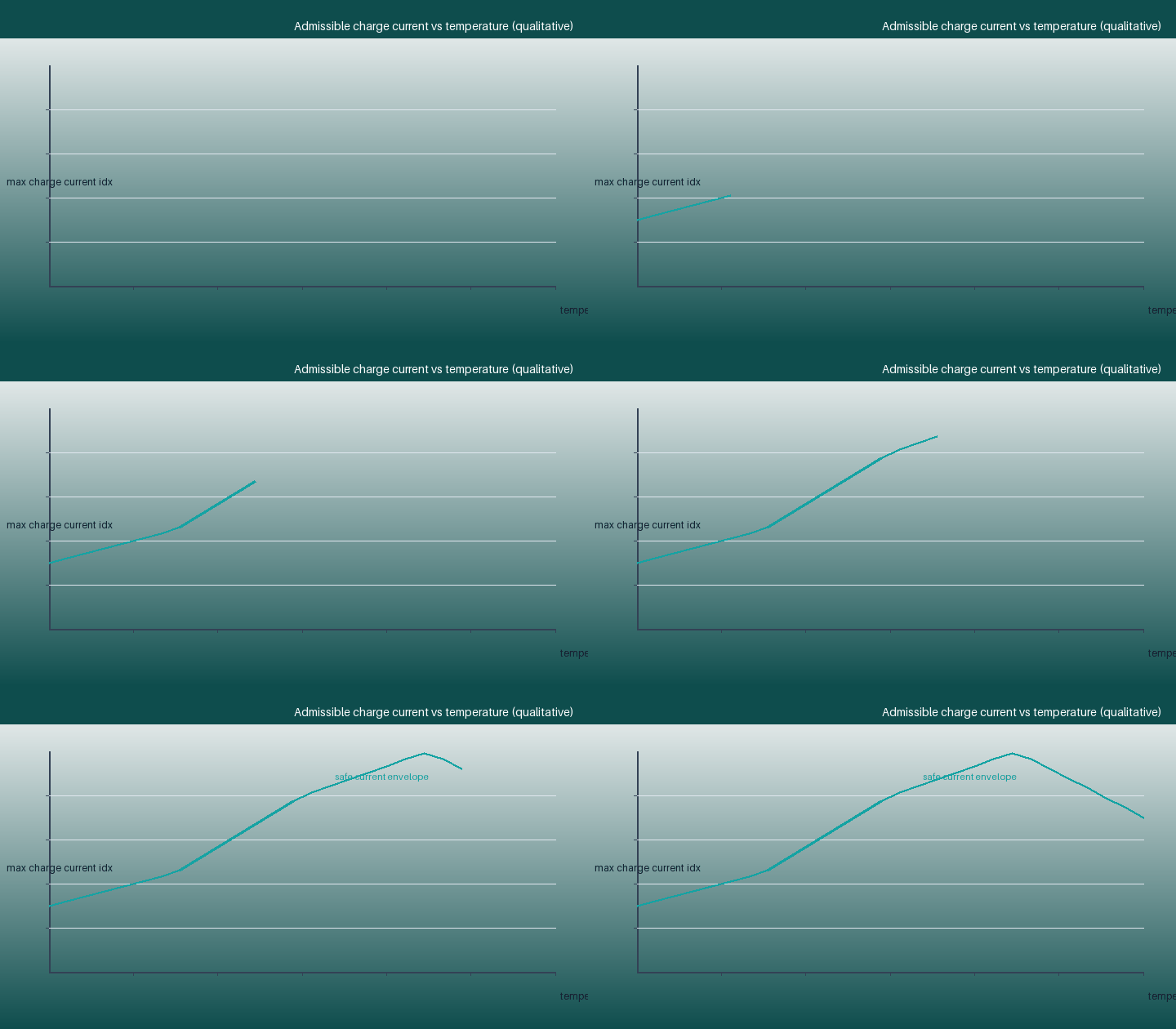
The decisive cold limitation is oxygen recombination: it relies on gas diffusion through the separator and surface catalysis at the negative, both strongly temperature-dependent. A current that recombines smoothly at 20 C accumulates oxygen at 0 C and below, so internal pressure climbs earlier and faster - the same mechanism as an excessive current at room temperature (Paper 3), but reached at a much lower current threshold in the cold.
Vent risk is therefore the reason fast charge is gated by a cold cutoff near 0 C in charge ICs: the prohibition is conservative protection of the sealed system, not a preference for warm operation, and below the threshold current must be reduced to what the cold recombination can consume.
Because cold raises resistance and terminal voltage, a voltage-based stage transition or maximum-voltage bound triggers early, undercharging the cell; conversely a charger that ignores the elevated voltage and pushes to a fixed voltage overcharges once the cell warms. Robust cold charging current-references its decisions, compensates voltage thresholds for temperature and internal resistance, and leans on charge delivered and dT/dt rather than absolute voltage.
The -delta-V peak is also distorted in the cold - larger and delayed - so termination thresholds validated at room temperature must be extended or the controller should use a temperature-compensated, multi-criterion decision rather than a fixed millivolt dip.
Where the system can influence temperature, the preferred solution is to bring the cell into its fast-charge window before applying high current. This may be environmental (charging equipment after it has equilibrated indoors), heater-based in outdoor cabinets, or electrical: a small conditioning current whose I-squared-R and recombination heat gently raises cell temperature while adding some charge, with the controller monitoring dT/dt and only ramping to fast current once the NTC crosses the cold threshold - the qualification gate of Paper 12 applied to the cold case.
Self-warming must be closed-loop: the conditioning current is sized to warm without accumulating pressure, and the controller watches that temperature actually rises and pressure proxies stay benign, faulting out if warming stalls.
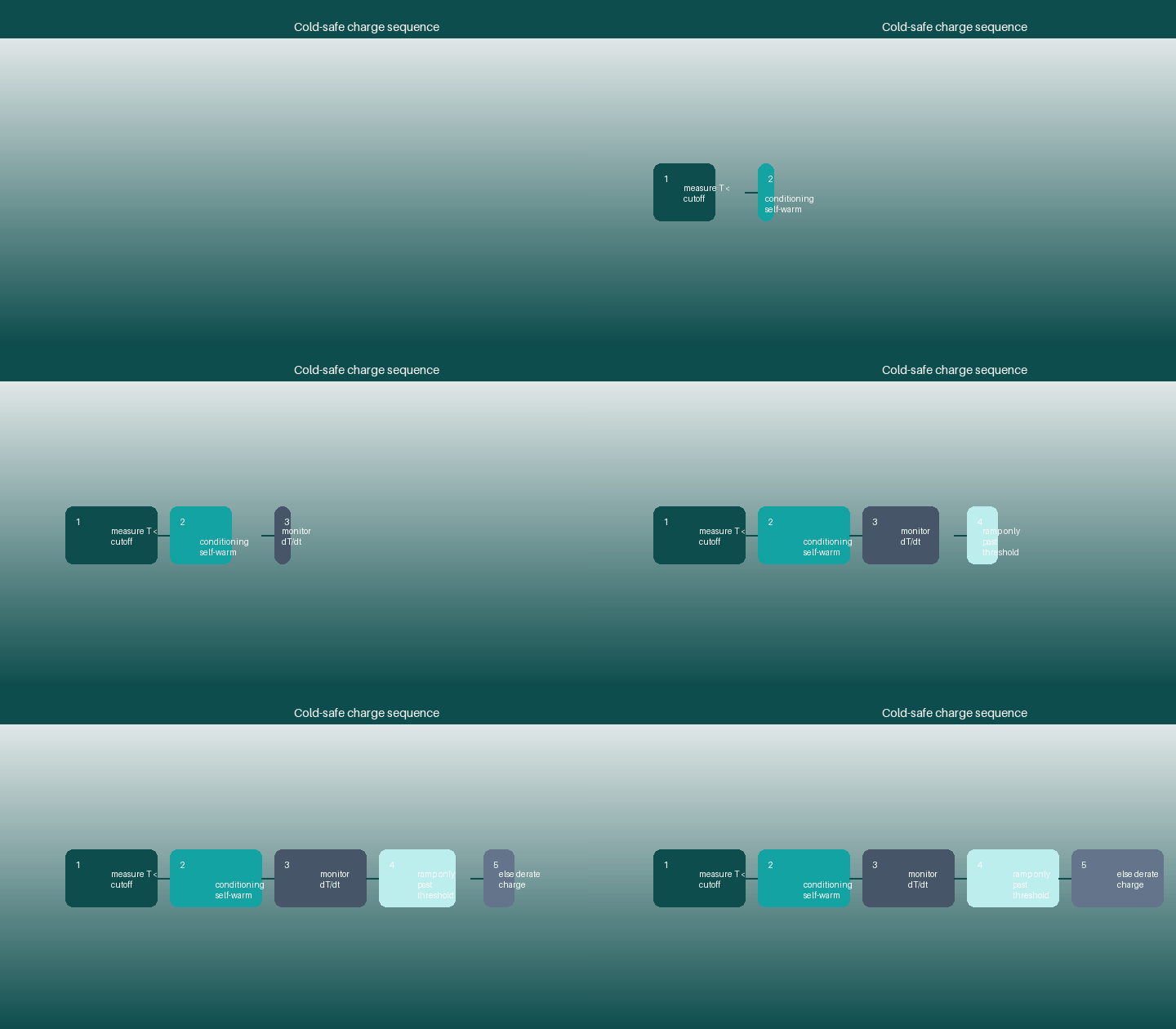
When warming is impossible, charge at a derated current - broadly toward slow-charge levels as temperature approaches and passes 0 C - with conservative stages, longer rests (pulse profiles help the sluggish recombination catch up, Paper 13) and termination biased toward timers and temperature rather than the distorted voltage peak. The first figure contrasts the cold and warm admissible-current windows; the second sequences a cold-safe charge from qualification through conditioning to ramped fast charge.
Cold-chain, winter telecom backup, outdoor sensors and polar/military equipment all use variants of this logic: accept longer charge time in exchange for keeping gas generation within the cold recombination rate, never venting a cell simply because it was cold.
State the fast-charge low-temperature cutoff, the conditioning-current self-warm rule with its dT/dt supervision, the derated current-versus-temperature curve below the cutoff, temperature-compensated voltage and termination thresholds, and the absolute fault behaviour. Validate in a thermal chamber across the cold range with instrumented pressure where possible. Weijiang supplies cold-temperature charge envelopes, resistance and recombination-limited current data by grade so winter-rated products charge to full capacity without venting. The complementary problem - charging when the cell is too hot - follows.
Weijiang Power designs and manufactures nickel-metal hydride cells, matched packs and charging-ready configurations for consumer, industrial, medical and mobility customers, and supports partners with charge-protocol guidance, IEC 61951-2 performance files, IEC 62133-1 safety evidence and charger co-validation. Share your cell format, charge rate, thermal envelope and cycle target and our engineers will specify a cell-and-charge combination that protects both runtime and service life. Review the range on the products page.


