High drain is not one load but a family of load profiles, and matching a nickel-metal hydride cell well means reading each device's current signature - its standby current, working current, pulse peaks, duty cycle and acceptable voltage. This selection paper walks through the principal high-drain household categories, explains what each one demands of a cell, and translates that demand into capacity, internal-resistance and pack-configuration choices. It is written for buyers and product managers who need a repeatable way to specify consumer NiMH rather than choosing by the largest mAh on offer.
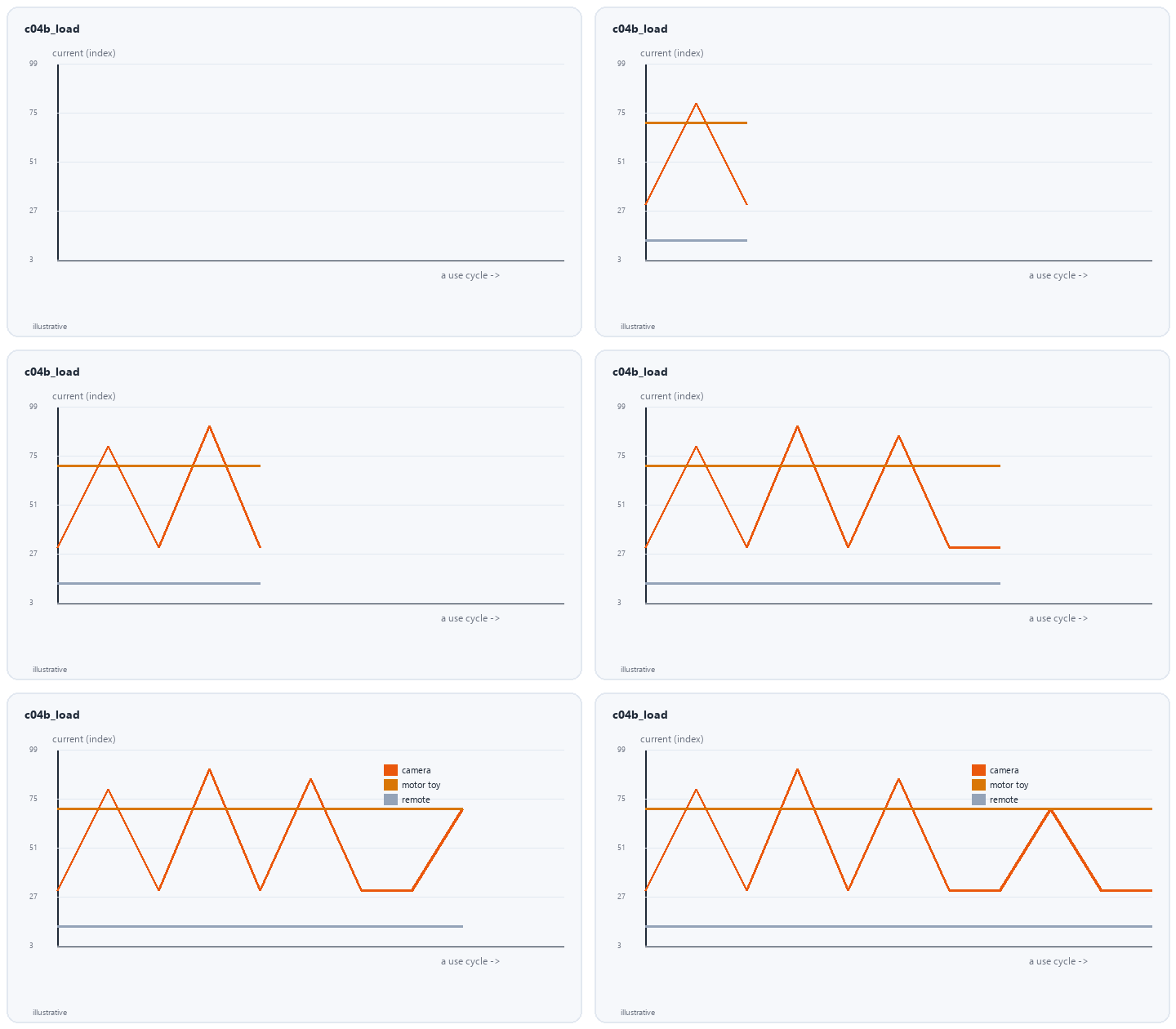
A compact camera idles at low current while composing, draws moderate current for lens and screen operation, and imposes sharp peaks when charging the flash, writing to memory and capturing. Runtime is governed less by average current than by the ability to survive repeated peaks without the terminal voltage falling below shut-off - exactly the low-internal-resistance, flat-plateau behaviour of NiMH. Selection favours a moderate-to-high capacity AA with low resistance over a nominal high-capacity cell with weak pulse behaviour; a four-cell camera benefits from lot-matched cells so no single cell sags first and trips the battery meter.
Electric and ride-on toys, model vehicles and motorised playthings combine a start-up inrush several times the running current with sustained motor load and frequent stalls that load the motor further. These packs are often multi-cell series strings (for example 4.8 V, 6 V, 7.2 V or 9.6 V packs) built from matched AA or sub-C NiMH cells with welded tabs. Selection emphasises matched internal resistance for even voltage across the string, robust tab and weld construction for vibration, and a capacity/current balance tuned to the motor; over-discharge protection or at least a low-voltage warning prevents the weakest cell from reversal during a long play session.
Wireless controllers, handheld controllers and portable audio draw a medium current with haptic, rumble and radio pulses superimposed on a steady baseline, often over many-hour sessions. These devices reward the LSD property as much as high current capability: a controller that is used in bursts across weeks benefits from cells that retain charge between sessions and hold a stable voltage so haptics and wireless links do not trigger premature low-battery warnings. A mainstream LSD AA with good all-round retention is the economic sweet spot, with capacity sized to the target session length.
Personal-care devices usually contain a built-in NiMH pack - often two-thirds-AA or AA cells in a small series string - that lives on a dock or charger and cycles shallowly for years. Here the selection priorities shift from peak current to charge acceptance, trickle tolerance and cycle endurance under the device's specific charge circuit; the cell must tolerate frequent top-ups without the capacity fade that comes from poor maintenance-charge control. Co-engineering the cell with the device's charge profile, using the IEC 61951-2 permanent-charge endurance test as a reference, is what delivers the multi-year service life consumers expect of a bathroom appliance.
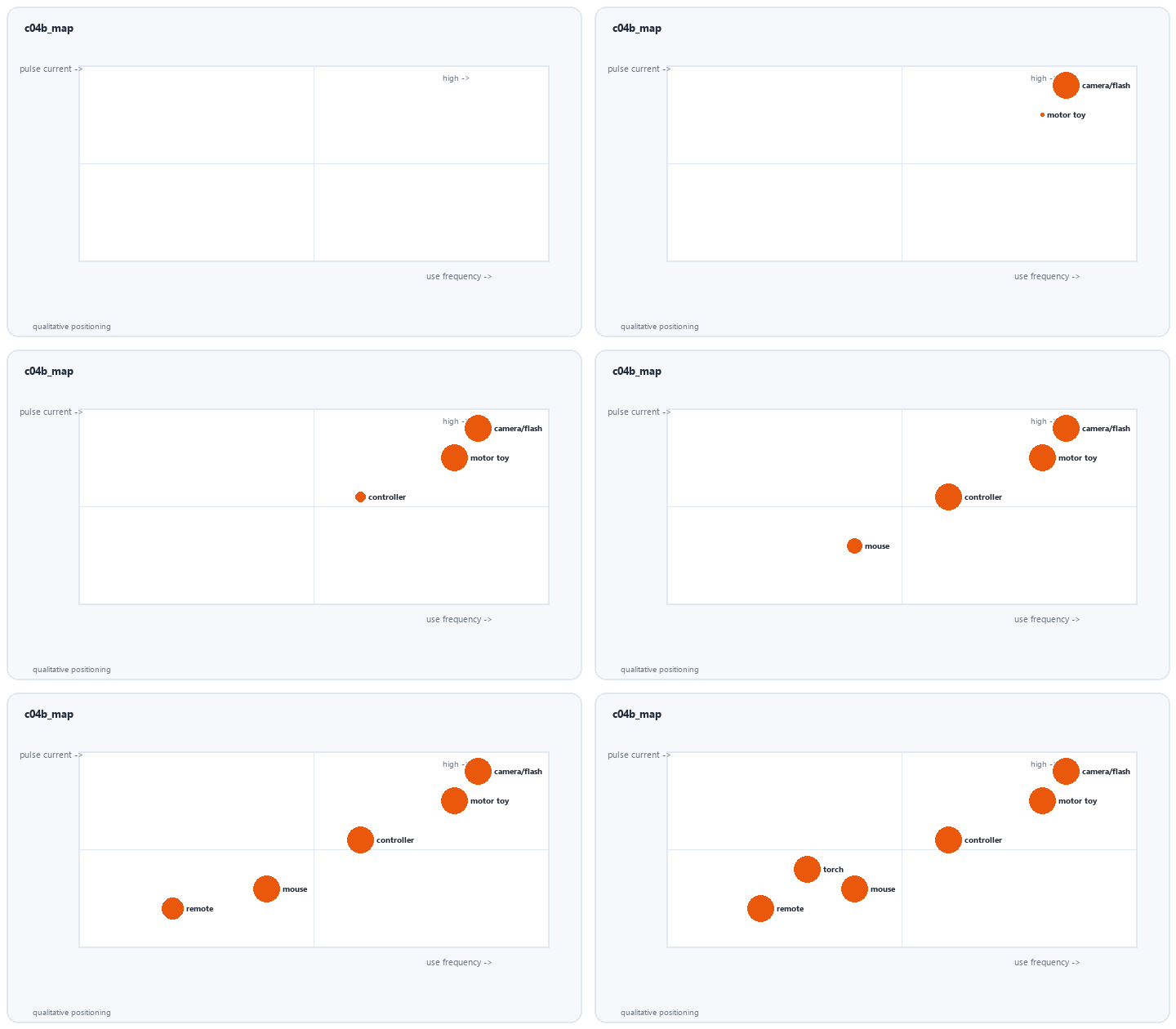
Portable fans, hand vacuums, high-lumen torches and bicycle lights span sustained-current and high-pulse behaviour; a high-lumen torch, like a flash, values low resistance for bright regulation, while a small motor values sustained delivery and thermal tolerance. The animated device map below places categories on a grid of pulse intensity against use frequency and indicates the NiMH grade each region favours, illustrating why one 'best AA' cannot serve every slot and why a supplier needs a graded line rather than a single hero cell.
For each device, capture five numbers - resting current, typical working current, peak current and its duration, duty cycle, and the low-voltage cut-off - then choose cell size and configuration to keep terminal voltage above cut-off at the peak and to deliver the target session or cycle count, impose lot-matching for series strings, and verify against a real recorded load trace rather than a constant-current approximation. This procedure, detailed for testing in Paper C, turns anecdotal 'it lasts longer' feedback into a specification that procurement, engineering and marketing can all use, and it lets a NiMH supplier recommend the right grade from a coherent graded portfolio.
Weijiang Power builds graded and lot-matched NiMH cells and welded packs for cameras, motorised toys, controllers and personal-care devices, selected from real recorded current profiles and cut-off voltages. Share your device load trace and runtime target and we will recommend cell size, configuration and resistance grade.


